
Designing with 3D-printed clay: from toolpaths to distinctive ceramics
How architecture and 4D-printing research inform Deramic's approach: designing printer paths directly to develop bespoke ceramic forms and textures.
Design notes: Mehmet Oğuz Nas — Architect, Deramic
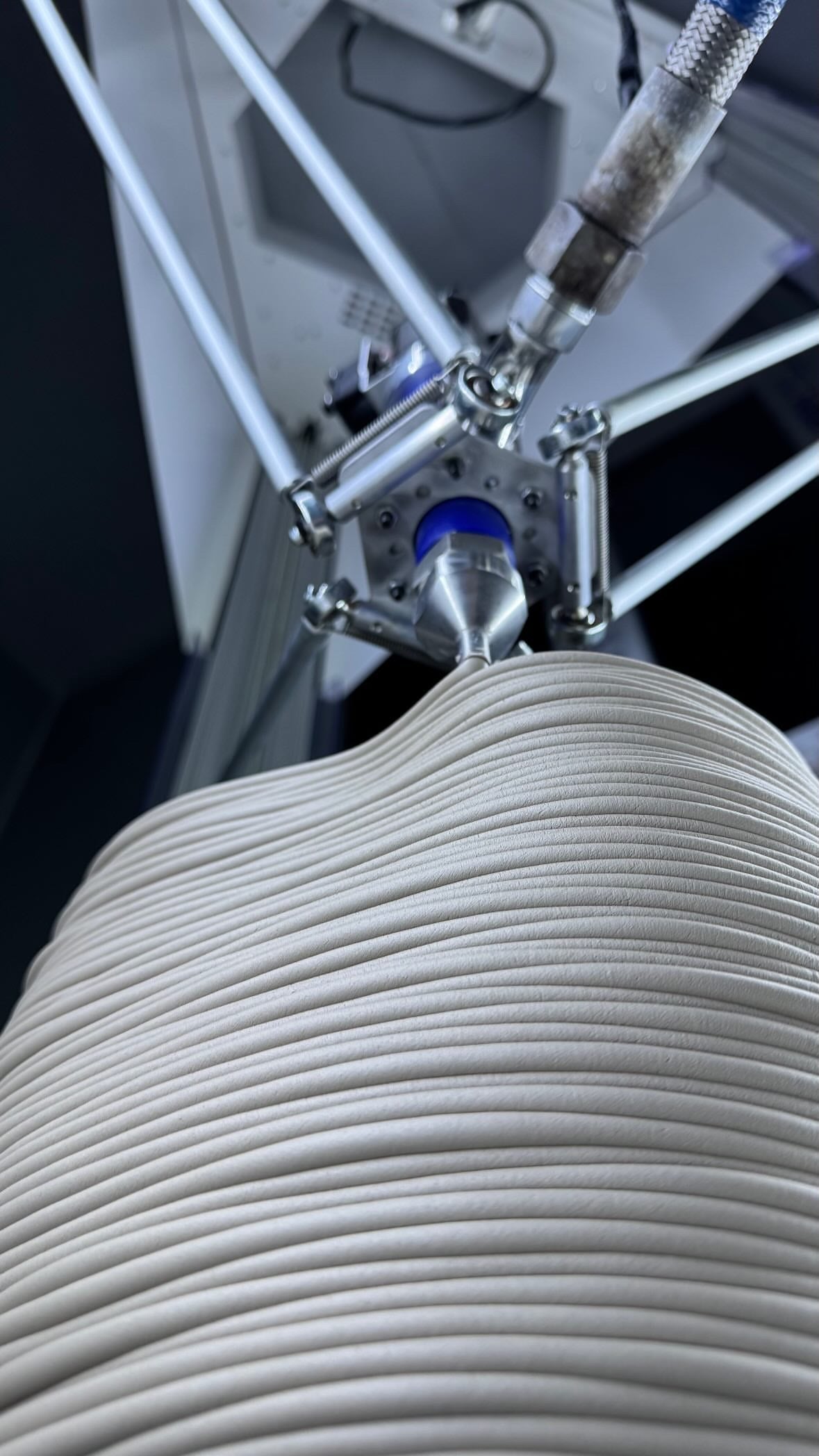
The character of a ceramic surface can emerge from the lines along which clay is deposited. At Deramic in Ankara, we approach clay 3D printing as a field of design and production in which we design those lines directly. We develop form, texture and the production path together.
This approach draws on my architectural education, my master's work on 4D printing and my current research into clay 3D printing. When designing distinctive ceramics for a hotel, restaurant or architectural project, we connect that knowledge to the identity of the space and the function of the piece.
From architecture to 4D printing, then to clay
I completed my architectural education at Middle East Technical University, known as METU or ODTÜ. In my 2023 master's thesis at METU, I explored 4D printing through wood-based actuators that respond to changes in humidity. 4D printing considers how a 3D-printed object can undergo a programmed change in shape or function over time or in response to a stimulus. I learned to control the printer's path directly through that research.
Today, my ongoing doctoral research in Architecture at METU focuses on clay 3D printing and LDM (Liquid Deposition Modeling) additive manufacturing. My design approach at Deramic develops between this research and the behaviour of real material in production. I am interested both in how a line is defined digitally and in how it takes shape in clay.
Treating the printer's path as a design element
In a common FDM (Fused Deposition Modeling) workflow using plastic filament, a three-dimensional model is prepared first. Slicing software translates it into layers and paths for the printer to follow. The model, slicing settings and resulting paths all influence the printed outcome.
When developing distinctive forms and textures at Deramic, we generate the printer's lines directly and manipulate them parametrically. The starting point includes the route and pattern in which clay will be deposited, as well as the boundaries of the object. Digital design therefore encompasses the production movement itself.
Designing at a scale where every line is visible
A 0.4 mm nozzle is a common choice on many desktop plastic-filament printers. The 4, 6 and 8 mm nozzle diameters I use in my clay printing work create a different production scale. At this scale, the deposited clay lines play a prominent part in the surface. The way they follow one another, change direction and come together affects how the texture is perceived.
We develop these traces as part of the design. Parametric control allows us to change the arrangement of the lines and the relationships between forms. Different surface qualities and related forms can emerge from the same production approach. Their distinctive character comes from designing the movements through which a shape is made.
Production conditions inform the design from the start
The material in our printer is real clay. The printed piece is dried and fired to become ceramic. Alongside the digital drawing, we therefore need to consider the shapes clay can support during printing and its behaviour during drying and firing.
We draw on production experience from the beginning of the design process. Considering these conditions as we develop form and texture helps the design idea mature alongside its means of production. Our aim is a clean, repeatable production process that preserves the intended character. The form, material and intended use of each project shape that assessment anew.
What can this approach offer your space?
Toolpath design is a means of working; the project begins with the identity and function of the space. The relationship with light in a bespoke light fitting, texture and rhythm across a wall surface, or a shared language between different pieces can all be part of the design brief.
Our preference is to develop the design from a brief describing the identity and function of the space. Understanding its needs helps us decide which possibilities in form and texture to explore. By considering design and production together, we can apply our digital tools to the project's needs. An architect or project owner does not need to bring a finished print file. We can begin with the space and the role they want the design to play.
Working with designers from an early stage
We can also work with architects and designers who want to develop their own designs. Joining such a project early, through collaborative design or production consultancy, helps us consider the possibilities and constraints of clay printing while the form is still taking shape.
If you would like Deramic to develop a bespoke design for your space, we can begin with a brief describing its identity and function. If you are developing your own design, you can share the idea, its intended context and your production expectations. In either case, we make how the design will look and how it will be made part of the same conversation.
Read how we begin a bespoke design for your space.