
How does a bespoke design for your space begin?
You do not need a finished product idea to begin. Deramic approaches bespoke lighting and ceramic surfaces through the space's identity, function, texture and material.
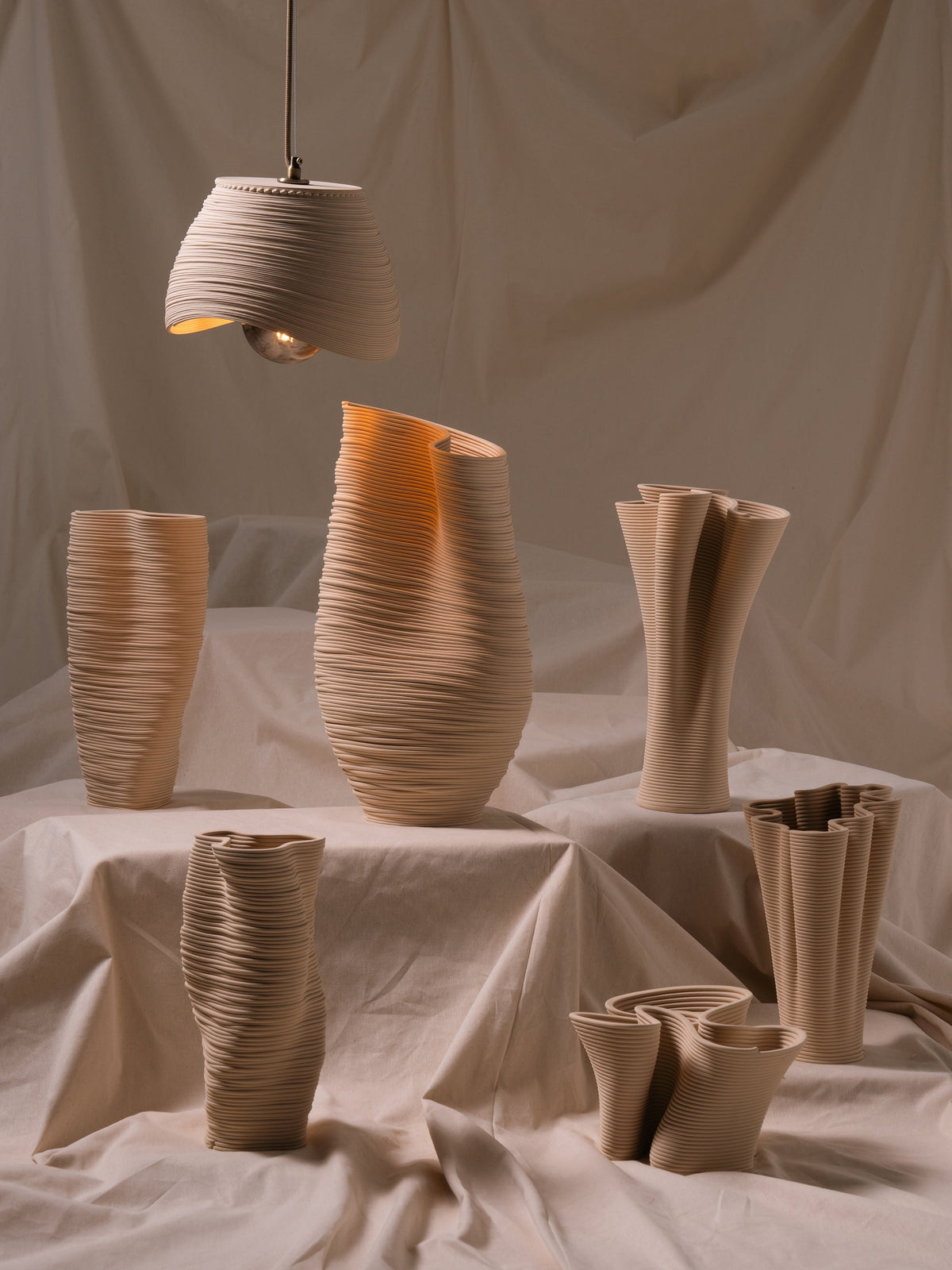
Design notes: Oğuz — Architect, Deramic
You may want something distinctive for your space without yet knowing what the object should be. Lighting that expresses a hotel's identity, a surface that changes a restaurant's atmosphere or a ceramic feature that belongs within an architectural project: the exact form does not have to be settled at the beginning.
At Deramic in Ankara, we begin each project with the needs of the space. Our experience in design and ceramic production, the textures we have developed and our parametric design tools form the knowledge we draw on to interpret those needs. A distinctive design emerges from how these possibilities relate to the place.
The identity and function of the space
We first try to understand the character of the space and what the design should do within it. What experience should it offer the people using it, and what should it make them feel? A light, a divider and a surface serve different needs. The existing design language and the function of the piece shape the direction together.
For lighting, a wish for indirect light or for a pendant that illuminates the area directly below affects both form and texture. For a divider beside a dining area, we can discuss its position and functions together: how might it relate to lighting or planting? The same type of object can raise a different design question in a different space.
Knowing where it will be used is part of that starting point. A brief for an interior, an outdoor space or a facade raises different conditions to consider. Discussing this context early helps us frame the design question beyond appearance alone.
Considering form, texture and material together
For us, form, texture and material are interdependent decisions. The rhythm of a surface can make a piece feel more animated or more restrained; the colour of the clay and its fired appearance can change the character of the same form. We do not treat texture as decoration added to an already finished shape.
We consider the colour of the stoneware clay, whether to work with porcelain's relationship to light, and whether a surface should be glazed or unglazed. A translucent glaze might be chosen to keep the underlying texture visible. How the surface will be used and cleaned also informs the relationship between glaze and texture. We approach these decisions through the character of the space and the function of the design.
Production experience informs the design
We 3D print our pieces in real clay and fire them to produce ceramic. Our experience of how clay behaves during printing, drying and firing influences which directions we investigate while designing. We account for production constraints throughout the design process, considering the digital form and the object to be made together.
Designing the paths followed by the printer is part of this approach. We can develop a texture's character through the way clay is deposited across a surface. Production knowledge therefore participates in the design process itself, informing how we think about form and surface.
Collections as a palette of forms and textures
We think of our collections as a palette of forms and textures. Digital modelling and parametric tools let us assign different textures to different forms and develop new combinations within that palette. Coirra shows how a texture recalling the coil technique can be used in organic forms; Keruna explores the relationship between openwork texture and lighting. In Nirea, we investigate light transmission through porcelain and variations in wall thickness. In Keruna, light passes through openings; in Nirea, we work with light passing through the porcelain body itself.
Our parametric design tools allow us to develop these variations while preserving certain relationships. The boutique hotel in Ayvalık provides a concrete example: we varied the forms and scales of pendants sharing the Coirra texture. For the rooms, stairwell and lobby, we developed compositions that belong to the same family without being identical.
If an existing form and texture suit the needs of the space, we can use them. Where a different relationship is needed, we can explore new combinations within the palette and our algorithms for developing organic forms. Beginning each project with the needs of the space means reinterpreting this accumulated knowledge for that particular place.
Begin by telling us about your space
You do not need to arrive at the first conversation with a fully developed design idea. Tell us about your hotel, restaurant or architectural project, the atmosphere you want to create and the need you want the design to address.
You can contact us as the project owner or together with your architect. Photographs or plans, approximate dimensions and information about how the space will be used help make the conversation concrete. This starting point allows us to consider the identity of the space alongside the possibilities of material and production.
Explore our approach to bespoke ceramic lighting.
Discover our ceramic wall and surface designs.
Read how different lights share a design language in the Ayvalık hotel project.